
Excessive nighttime barking can be a frustrating problem for both dog owners and their neighbors. If you’re struggling with a dog that won’t stop barking at night, you’re not alone. This comprehensive guide will help you understand why dogs bark at night and provide effective solutions for nighttime dog barking training. Whether you have a small dog, a big dog, or a puppy, these techniques and tools will help you restore peace to your evenings.
Why Do Dogs Bark at Night?
Before diving into solutions, it’s crucial to understand the reasons behind nighttime barking. Dogs may bark at night due to various factors:
- Boredom: Lack of mental and physical stimulation during the day can lead to restlessness at night.
- Anxiety: Separation anxiety or general anxiety can cause excessive barking.
- Noise phobia: Unfamiliar sounds can trigger barking in sensitive dogs.
- Territorial behavior: Dogs may bark to alert you of perceived threats.
- Medical issues: Pain or discomfort can cause nighttime vocalization.
- Attention-seeking: Some dogs learn that barking gets them attention, even if it’s negative.
Understanding the root cause of your dog’s barking is the first step in addressing the issue effectively.

Solutions for Dog Barking at Night
1. Establish a Consistent Routine
Creating a predictable daily routine can help reduce anxiety and boredom-related barking:
- Set regular times for meals, walks, and playtime.
- Provide ample exercise and mental stimulation during the day.
- Establish a calming bedtime routine to signal it’s time to rest.
2. Create a Comfortable Sleep Environment
Ensure your dog has a quiet, comfortable place to sleep:
- Use a crate or designated bed in a quiet area of the house.
- Consider using white noise or calming music to mask external sounds.
- Use blackout curtains to block out light that might disturb your dog.

3. Address Anxiety and Fear
For dogs barking at night due to anxiety or noise phobia:
- Gradually desensitize your dog to trigger sounds.
- Consider using anxiety wraps or calming pheromone diffusers.
- Consult with a veterinarian about anti-anxiety medications if needed.
4. Increase Daytime Activity
Prevent boredom-related barking by ensuring your dog is sufficiently tired at night:
- Increase the duration or intensity of daily walks.
- Incorporate interactive toys and puzzle feeders for mental stimulation.
- Engage in training sessions to tire out your dog mentally and physically.
5. Use Positive Reinforcement
Reward quiet behavior to encourage it:
- Praise and treat your dog when they remain quiet during typically noisy times.
- Ignore attention-seeking barking to avoid reinforcing the behavior.
- Use a command like “quiet” and reward compliance.
Training a Dog to Stop Barking at Night
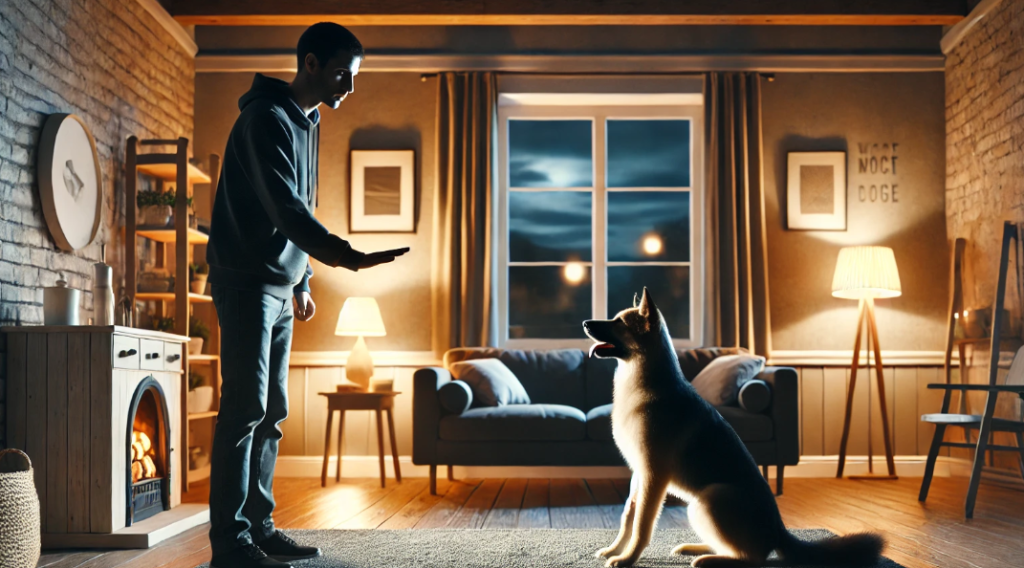
Step 1: Identify the Trigger
Observe your dog to determine what’s causing the nighttime barking. This will help you tailor your training approach.
Step 2: Remove or Minimize the Trigger
If possible, remove or reduce the stimulus causing the barking. For example, if your dog barks at street noises, consider moving their sleeping area to a quieter part of the house.
Step 3: Teach the “Quiet” Command
- When your dog starts barking, say “quiet” in a calm, firm voice.
- Wait for a moment of silence, then immediately praise and reward.
- Gradually increase the duration of quiet time required for a reward.
Step 4: Consistency is Key
Be consistent in your training approach. Every family member should follow the same rules and commands to avoid confusing your dog.
Step 5: Be Patient
Remember that training takes time. Stay patient and persistent, and you’ll see results.

Training Aids to Stop Dog Barking at Night
While training is the most effective long-term solution, certain aids can help in the process:

- Features: Emits ultrasonic sound waves to deter barking. Adjustable frequency levels. Durable and weatherproof. Long-lasting battery life.
- Pros: Effective for indoor and outdoor use. Humane alternative to shock collars.
- Cons: May not be effective for dogs with hearing impairments
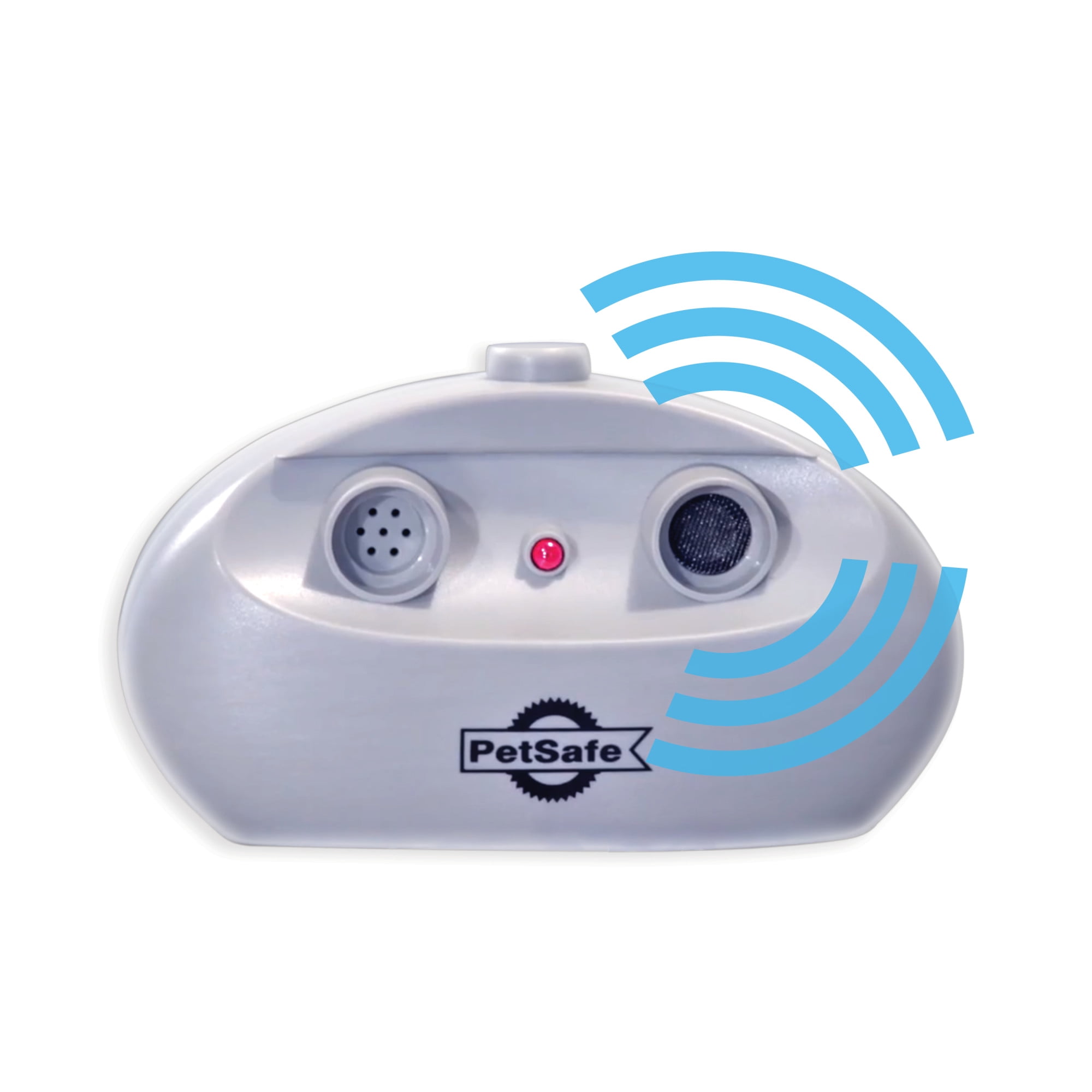
- Features: Emits high-pitched ultrasonic sound. Effective range of 50 feet. Designed for indoor use.
- Pros: Non-invasive and safe for dogs. Easy to use.
- Cons: Requires 9V batteries (not included).

- Features: Long-range ultrasonic technology. Adjustable sensitivity levels. Rapid charge feature.
- Pros: 3.4x more effective than traditional training tools. Protects dogs’ sensitive hearing.
- Cons: Not effective for dogs with hearing impairments

- Features: Upgraded 25kHZ anti-bark device. 50 feet range. Multiple modes including sonic waves and LED light.
- Pros: High satisfaction rate. Suitable for dogs 6 months and up.
- Cons: May not be as effective without positive training

- Features: Emits 30,000-hertz frequency. Includes LED flashlight. Handheld and portable.
- Pros: Effective for all dog breeds and sizes. Can be used while jogging or walking.
- Cons: May not work with some dogs
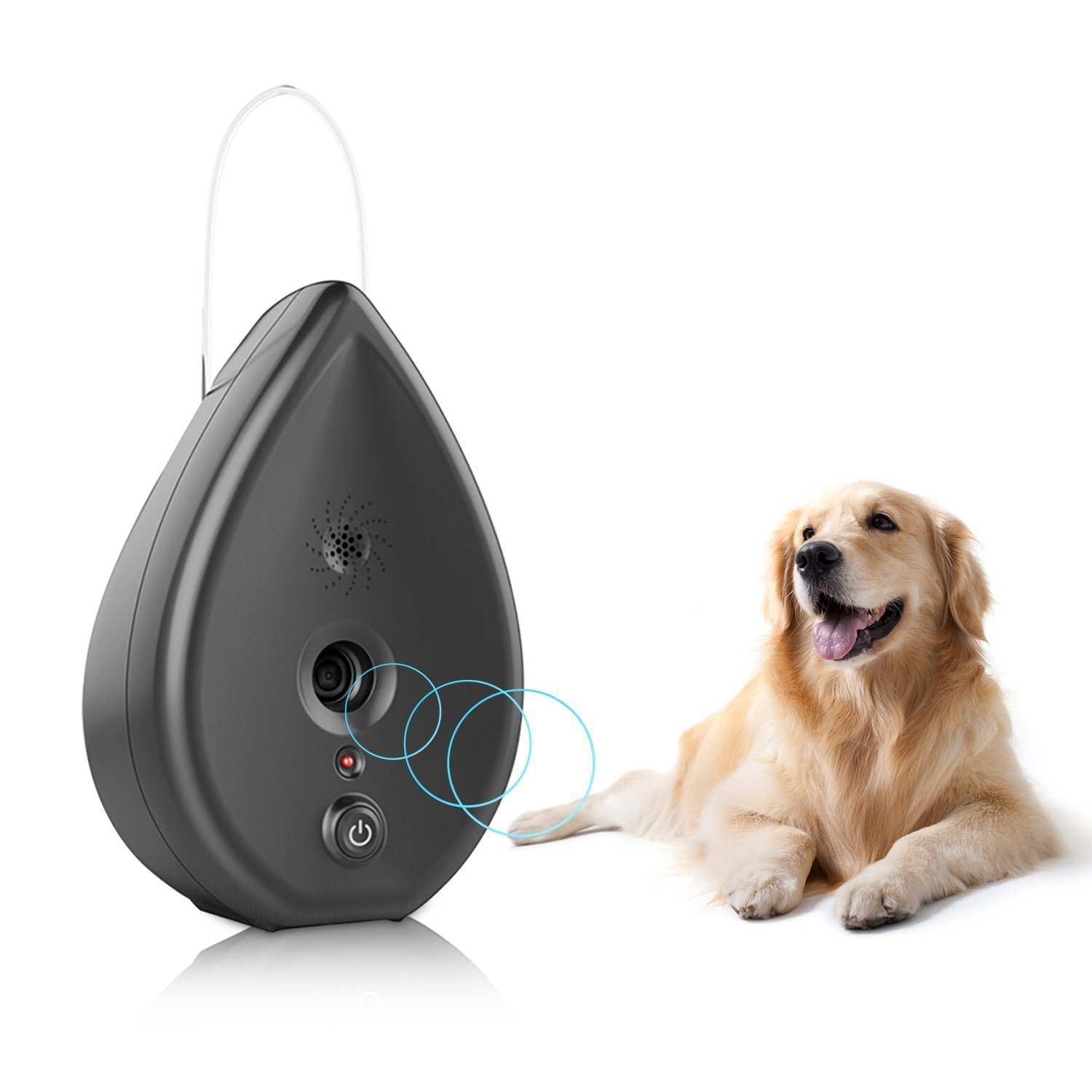
- Features: Ultrasonic sound at 25KHZ. 16.4ft control range. Lightweight and portable.
- Pros: Safe for all sizes of dogs. Easy to use with an adjustable wrist strap.
- Cons: Does not work on dogs with hearing impairment
When using any training aid, it’s crucial to follow the manufacturer’s instructions and use them as part of a broader training strategy, not as a standalone solution.
Special Considerations
How to Train a Small Dog to Stop Barking at Night
Small dogs may be more prone to anxiety-related barking. Focus on creating a secure environment and using positive reinforcement techniques. The PAWPERFECT Anti-Bark Dog Trainer is a compact, budget-friendly option suitable for smaller breeds.
How to Train a Big Dog to Stop Barking at Night
Larger dogs may bark due to territorial behavior. Ensure they get plenty of exercise during the day and consider using a device like the Garmin BarkLimiter Deluxe Dog Training Collar for consistent correction.
Nighttime Dog Barking Training for Puppies
Puppies may bark at night due to separation anxiety or the need for attention. Gradually accustom them to being alone and use positive reinforcement to encourage quiet behavior. The PESTON Ultrasonic Dog Bark Deterrent can be a gentle tool for puppy training.

When to Seek Professional Help
If your dog’s nighttime barking persists despite consistent training efforts, it may be time to consult a professional:
- Speak with your veterinarian to rule out any medical issues.
- Consider working with a certified dog behaviorist or trainer for personalized guidance.
- For severe cases of anxiety or behavioral issues, your vet may recommend medication in conjunction with training.
Helpful Links
Certification Council for Professional Dog Trainers (CCPDT):
Association of Professional Dog Trainers (APDT):
International Association of Canine Professionals (IACP):
Pet Professional Guild (PPG):
American Kennel Club (AKC):
Karen Pryor Academy Certified Training Partners:
Training a dog to stop barking at night requires patience, consistency, and understanding. By identifying the root cause of the barking, implementing appropriate training techniques, and using supportive aids when necessary, you can help your dog learn to be quiet at night. Remember, every dog is unique, so be prepared to adapt your approach as needed. With time and effort, you and your furry friend can enjoy peaceful nights together.
Affiliate Discloser
This article contains affiliate links to products on Amazon.com and other online retailers. If you click on one of these links and make a purchase, I may earn a commission at no additional cost to you. This commission helps support the creation of free content on this website.
The information contained in this article is for general information purposes only and should not be considered as professional advice. I am not a veterinarian, trainer, or other animal care professional, and my opinions and recommendations are based on my own research and experience.
By using my affiliate link, you agree to these terms and conditions. If you have any questions or concerns, please don’t hesitate to contact me.